exploring wave propagation and light-matter interactions in media with vanishing refractive indices
introduction
The field of near-zero-index (NZI) photonics investigates materials where the effective permittivity, permeability, or both approach zero simultaneously. In these exotic media, the phase velocity of light approaches infinity, leading to a decoupling of spatial and temporal field variations. Consequently, the spatial phase of an electromagnetic wave remains uniform over macroscopic distances, fundamentally transforming how light propagates and interacts with physical structures. (Wu et al., 2021)
This research direction bridges foundational electromagnetics and advanced material science. By neutralizing the spatial phase accumulation of light, NZI media allow for the exploration of extreme optical regimes and wave phenomena that cannot be observed in conventional dielectric or metallic environments.
significance & applications
Operating in the near-zero-index regime unlocks unprecedented control over electromagnetic fields, offering a versatile platform for shaping wave fronts and enhancing quantum processes. The potential applications are highly disruptive, spanning shape-independent optical tunneling, highly efficient nonlinear optical frequency conversion, large-area single-mode coherent emission, and ultra-compact optical logic components for advanced computing and telecommunications.
@article{Wu2026,title={{Thermo-optic dynamics of effective epsilon-near-zero media}},author={Wu, Jiaye and Liu, Xuanyi and Clementi, Marco and Qiu, Shuang and Lin, Limin and Zhou, Zhang-Kai and Br{\`e}s, Camille-Sophie},year={2026},month=aug,journal={Advanced Photonics Nexus},volume={5},number={6},pages={066003},issn={2791-1519},doi={10.1117/1.APN.5.6.066003},lccn={1},}
Reconfigurable time-varying bleaching-channel switching in epsilon-near-zero metamaterials
@article{Liu2026,title={{Reconfigurable time-varying bleaching-channel switching in epsilon-near-zero metamaterials}},author={Liu, Xuanyi and Wu, Jiaye and Clementi, Marco and Qiu, Shuang and Lin, Limin and Garcia-Vidal, Francisco J. and Br{\`e}s, Camille-Sophie and Zhou, Zhang-Kai},year={2026},month=sep,journal={Communications Physics},volume={9},number={1},pages={in press},issn={2399-3650},doi={10.1038/s42005-026-02883-2},lccn={1},}
2025
Intracavity Epsilon-Near-Zero Dual-Range Frequency Switch
Featured journal cover of March 2025 issue. Click to view the cover art here. Download the cover art here.
@article{Wu2025,title={Intracavity Epsilon-Near-Zero Dual-Range Frequency Switch},author={Wu, Jiaye and Wang, Gang and Clementi, Marco and Zhou, Ji and Huang, Chenxingyu and Liu, Xuanyi and Fu, H. Y. and Li, Qian and Br{\`e}s, Camille-Sophie},year={2025},month=mar,journal={ACS Photonics},volume={12},number={3},pages={1276--1283},issn={2330-4022},doi={10.1021/acsphotonics.4c01322},lccn={1},}
@article{Wu2024a,title={Thermo-optic epsilon-near-zero effects},author={Wu, Jiaye and Clementi, Marco and Huang, Chenxingyu and Ye, Feng and Fu, Hongyan and Lu, Lei and Zhang, Shengdong and Li, Qian and Br{\`e}s, Camille-Sophie},year={2024},month=jan,journal={Nature Communications},volume={15},number={1},pages={794},issn={2041-1723},doi={10.1038/s41467-024-45054-z},lccn={1},}
2023
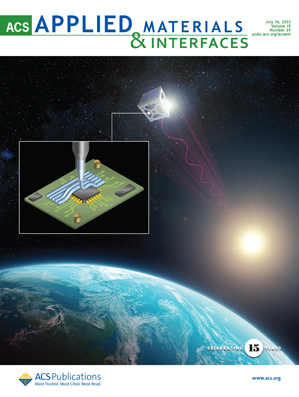
Manufacturing-Enabled Tunability of Linear and Nonlinear Epsilon-Near-Zero Properties in Indium Tin Oxide Nanofilms
@article{Huang2023,title={{Manufacturing-Enabled Tunability of Linear and Nonlinear Epsilon-Near-Zero Properties in Indium Tin Oxide Nanofilms}},author={Huang, Chenxingyu and Peng, Siwei and Liu, Xuanyi and Wu, Jiaye and Fu, Hongyan and Lu, Lei and Zhang, Shengdong and Li, Qian},year={2023},month=jul,journal={ACS Applied Materials \& Interfaces},volume={15},number={29},pages={35186--35195},issn={1944-8244},doi={10.1021/acsami.3c06270},lccn={2},}
2022
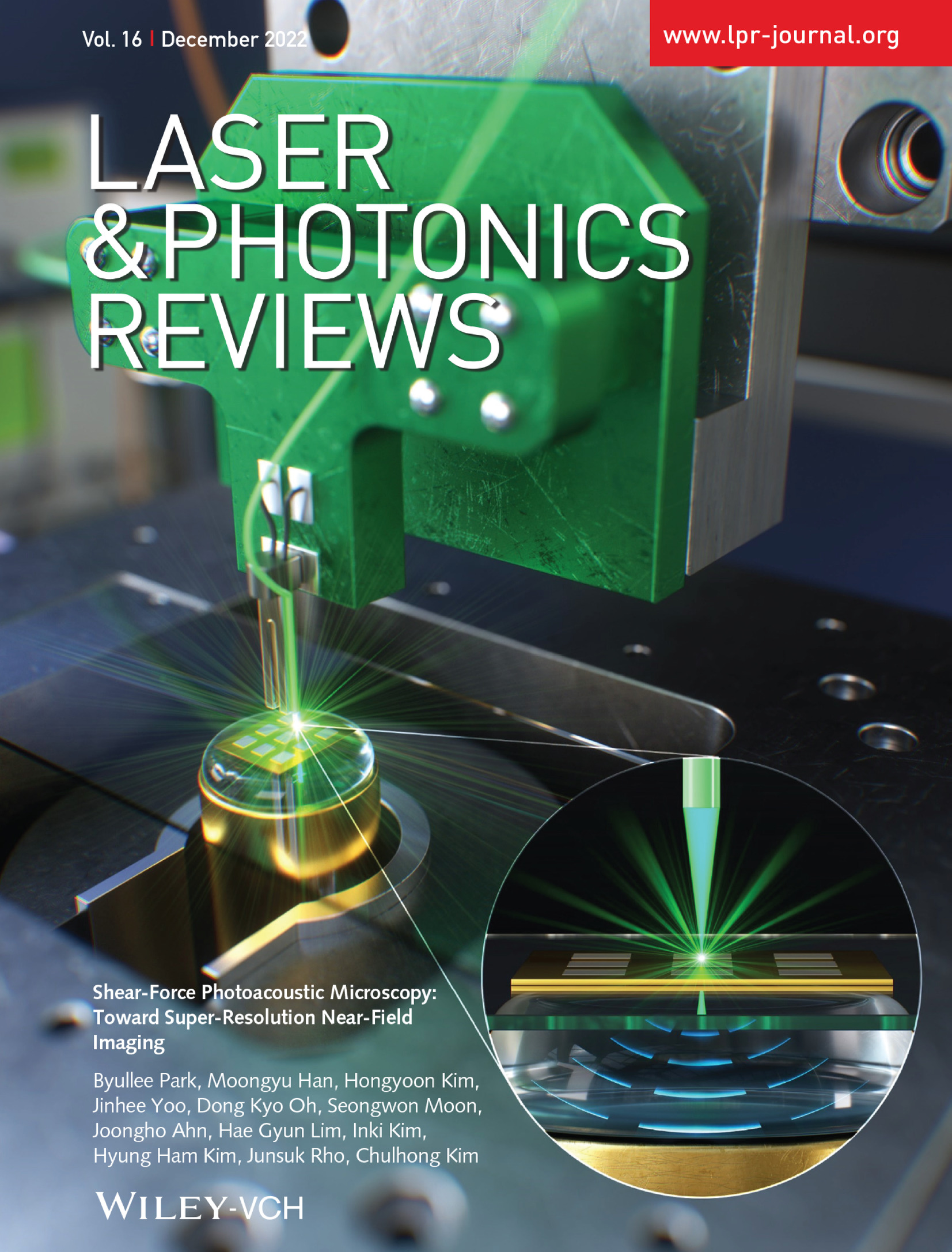
Observation of SQUID-Like Behavior in Fiber Laser with Intra-Cavity Epsilon-Near-Zero Effect
@article{Wu2022,title={{Observation of SQUID-Like Behavior in Fiber Laser with Intra-Cavity Epsilon-Near-Zero Effect}},author={Wu, Jiaye and Liu, Xuanyi and Malomed, Boris A. and Chang, Kuan-Chang and Zhao, Minghe and Qi, Kang and Sha, Yanhua and Xie, Ze Tao and Clementi, Marco and Br{\`e}s, Camille-Sophie and Zhang, Shengdong and Fu, Hongyan and Li, Qian},year={2022},month=dec,journal={Laser \& Photonics Reviews},volume={16},number={12},pages={2200487},issn={1863-8880},doi={10.1002/lpor.202200487},lccn={1},}
All-optical switching in epsilon-near-zero asymmetric directional coupler
@article{Sha2022,title={All-optical switching in epsilon-near-zero asymmetric directional coupler},author={Sha, Yanhua and Xie, Ze Tao and Wu, Jiaye and Fu, H. Y. and Li, Qian},year={2022},month=oct,journal={Scientific Reports},volume={12},number={1},pages={17958},issn={2045-2322},doi={10.1038/s41598-022-22573-7},lccn={2},}
Ultrafast dynamic switching of optical response based on nonlinear hyperbolic metamaterial platform
@article{Xie2022,title={Ultrafast dynamic switching of optical response based on nonlinear hyperbolic metamaterial platform},author={Xie, Ze Tao and Sha, Yanhua and Wu, Jiaye and Fu, H. Y. and Li, Qian},year={2022},month=jun,journal={Optics Express},volume={30},number={12},pages={21634--21648},issn={1094-4087},doi={10.1364/OE.457875},lccn={2},}
Pulse interactions in periodic and genetic-algorithm-optimized aperiodic epsilon-near-zero multilayers
@article{Huang2022,title={Pulse interactions in periodic and genetic-algorithm-optimized aperiodic epsilon-near-zero multilayers},author={Huang, Chenxingyu and Wu, Jiaye and Wang, Yuqing and Wang, Zimiao and Fu, H. Y. and Li, Qian},year={2022},month=jan,journal={Journal of the Optical Society of America B},volume={39},number={1},pages={258--265},issn={0740-3224},doi={10.1364/JOSAB.444596},}
@article{Wu2021,title={Epsilon-near-zero photonics: {{Infinite}} potentials},author={Wu, Jiaye and Xie, Ze Tao and Sha, Yanhua and Fu, H. Y. and Li, Qian},year={2021},month=aug,journal={Photonics Research},volume={9},number={8},pages={1616--1644},issn={2327-9125},doi={10.1364/PRJ.427246},lccn={1},}
Numerical investigations on the cascaded high harmonic and quasi-supercontinuum generations in epsilon-near-zero aluminum-doped zinc oxide nanolayers
@article{Wu2021a,title={Numerical investigations on the cascaded high harmonic and quasi-supercontinuum generations in epsilon-near-zero aluminum-doped zinc oxide nanolayers},author={Wu, Jiaye and Xie, Ze Tao and Fu, H.Y. and Li, Qian},year={2021},month=may,journal={Results in Physics},volume={24},pages={104086},issn={22113797},doi={10.1016/j.rinp.2021.104086},lccn={2},}
Manipulation of epsilon-near-zero wavelength for the optimization of linear and nonlinear absorption by supercritical fluid
@article{Wu2021b,title={Manipulation of epsilon-near-zero wavelength for the optimization of linear and nonlinear absorption by supercritical fluid},author={Wu, Jiaye and Liu, Xuanyi and Fu, Haishi and Chang, Kuan-Chang and Zhang, Shengdong and Fu, H. Y. and Li, Qian},year={2021},month=dec,journal={Scientific Reports},volume={11},number={1},pages={15936},issn={2045-2322},doi={10.1038/s41598-021-95513-6},lccn={2},}
Comparison Study of Multi-Slot Designs in Epsilon-Near-Zero Waveguide-Based Electro-Optical Modulators
@article{Sha2021,title={{Comparison Study of Multi-Slot Designs in Epsilon-Near-Zero Waveguide-Based Electro-Optical Modulators}},author={Sha, Yanhua and Wu, Jiaye and Xie, Ze Tao and Fu, H. Y. and Li, Qian},year={2021},month=jun,journal={IEEE Photonics Journal},volume={13},number={3},pages={1--12},issn={1943-0655},doi={10.1109/JPHOT.2021.3084943},lccn={4},}
Optimization of Epsilon-Near-Zero Multilayers for Near-Perfect Light Absorption Using an Enhanced Genetic Algorithm
@article{Wang2021,title={{Optimization of Epsilon-Near-Zero Multilayers for Near-Perfect Light Absorption Using an Enhanced Genetic Algorithm}},author={Wang, Yuqing and Wu, Jiaye and Wang, Zimiao and Huang, Chenxingyu and Fu, H. Y. and Li, Qian},year={2021},month=oct,journal={IEEE Photonics Journal},volume={13},number={5},pages={1--10},issn={1943-0655},doi={10.1109/JPHOT.2021.3113924},lccn={4},}
2020
Tunable Electro- and All-Optical Switch Based on Epsilon-Near-Zero Metasurface
@article{Xie2020a,title={{Tunable Electro- and All-Optical Switch Based on Epsilon-Near-Zero Metasurface}},author={Xie, Ze Tao and Wu, Jiaye and Fu, H. Y. and Li, Qian},year={2020},month=aug,journal={IEEE Photonics Journal},volume={12},number={4},pages={1--10},issn={1943-0655},doi={10.1109/JPHOT.2020.3010284},lccn={4},}
Comparative study on epsilon-near-zero transparent conducting oxides: High-order chromatic dispersions and modeling of ultrashort pulse interactions
@article{Wu2020a,title={Comparative study on epsilon-near-zero transparent conducting oxides: {{High-order}} chromatic dispersions and modeling of ultrashort pulse interactions},author={Wu, Jiaye and Xie, Ze Tao and Sha, Yanhua and Fu, H. Y. and Li, Qian},year={2020},month=nov,journal={Physical Review A},volume={102},number={5},pages={053503},issn={2469-9926},doi={10.1103/PhysRevA.102.053503},lccn={2},}


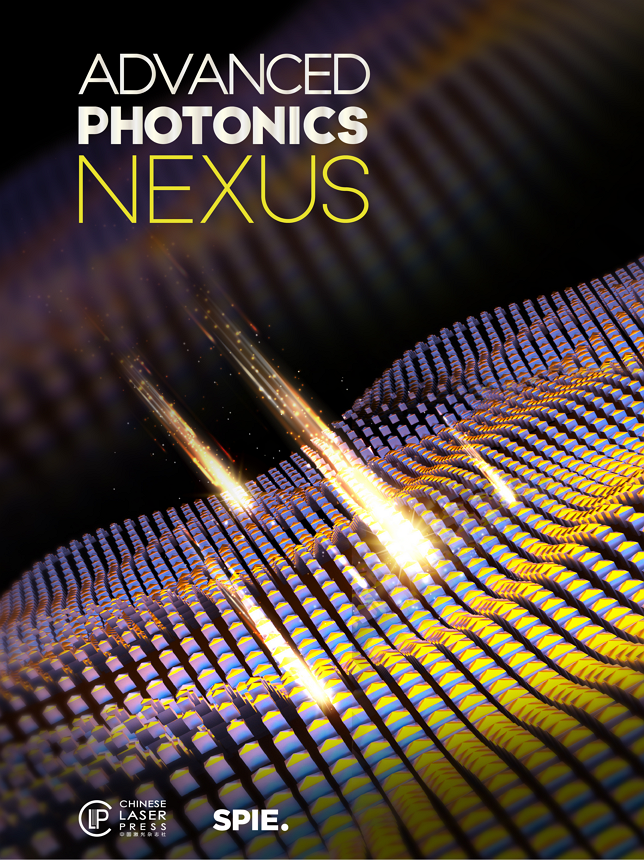


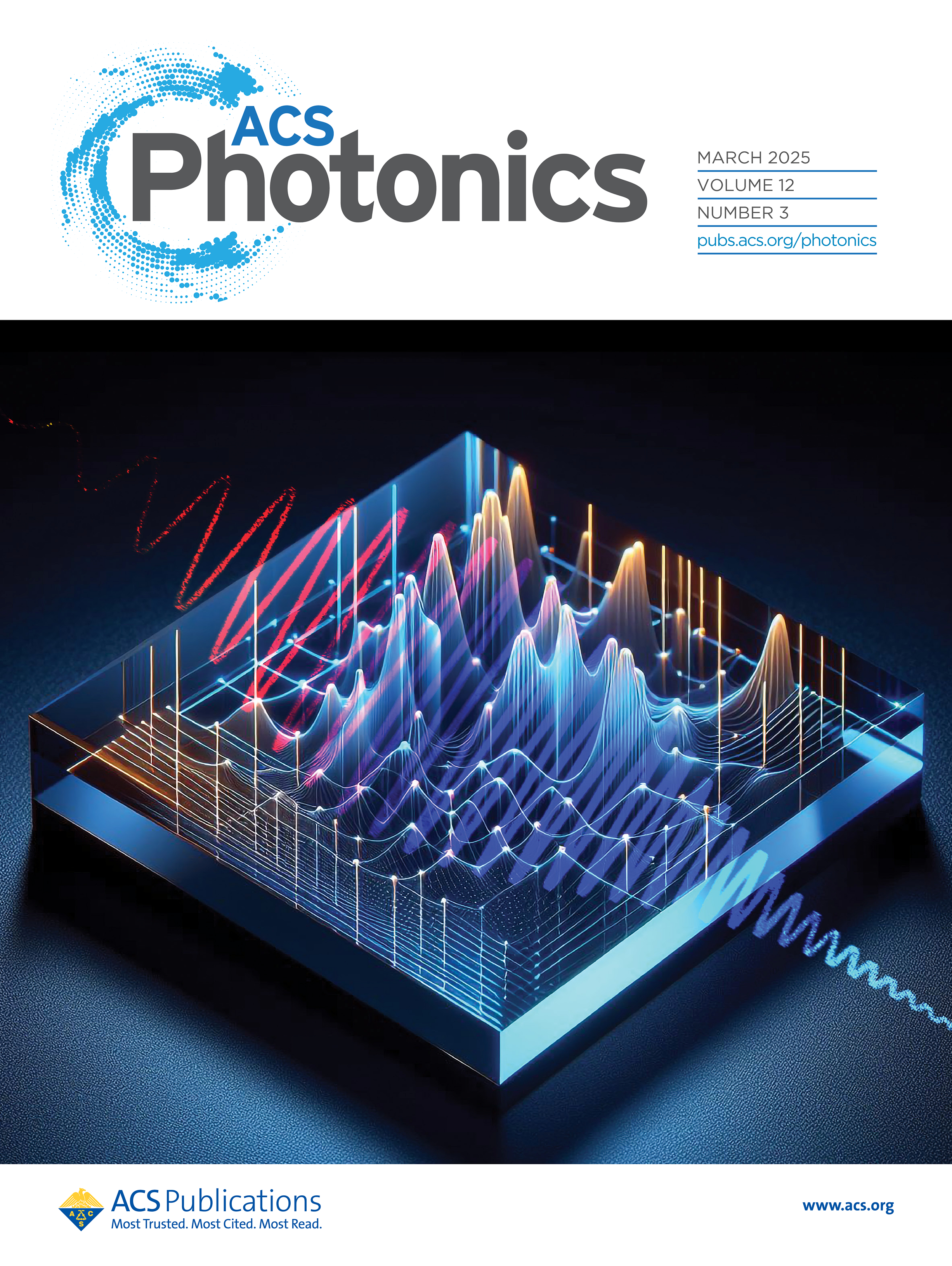 Intracavity Epsilon-Near-Zero Dual-Range Frequency SwitchACS Photonics, Mar 2025