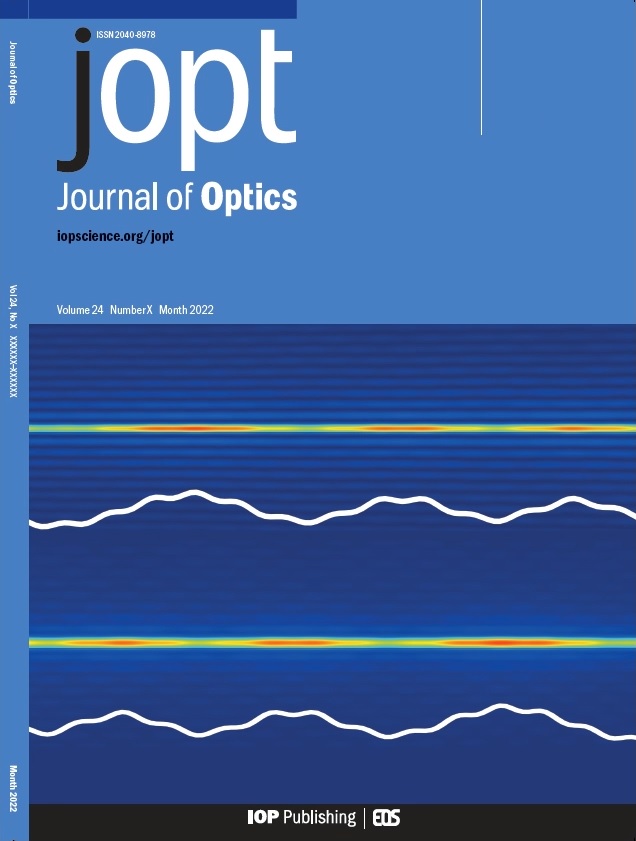
nonlinear spectral compression
shorter, faster, brighter, stronger
introduction
Spectral compression is the time-frequency dual of the more commonly known temporal pulse compression. While ultrashort pulses are essential for applications demanding high temporal resolution, numerous physical and chemical probing techniques require exceptional spectral resolution, which relies on transform-limited pulses with extremely narrow bandwidths. By meticulously managing the interplay between optical nonlinearity, specifically self-phase modulation (SPM), and chromatic dispersion within guiding media, we can fundamentally reshape the temporal phase profile of an optical pulse.
This research direction focuses on advanced time-frequency dynamics, utilizing mechanisms such as adiabatic evolution and self-similar propagation. Through these precise physical controls, we can efficiently compress the spectral bandwidth of a broadband optical pulse while simultaneously stretching its temporal duration, transforming readily available femtosecond pulses into highly coherent picosecond or nanosecond sources.
significance & applications
Unlike traditional optical filtering which achieves narrow bandwidths at the cost of massive energy loss, nonlinear spectral compression redistributes the frequency components without discarding photons. This energy-preserving nature drastically enhances the spectral brightness and signal-to-noise ratio of the light source. The resulting high-power, narrowband pulses are critical for driving innovations in high-resolution coherent Raman scattering (CRS) microscopy, precision laser spectroscopy, dense wavelength-division multiplexing (DWDM) communications, and the generation of high-quality seed pulses for advanced laser amplification systems.
research focus
- spectral compression in nonlinear cascaded fibers: engineering cascaded fiber systems with carefully tailored dispersion and nonlinearity landscapes to achieve high-ratio adiabatic or self-similar spectral narrowing. (e.g. (Wu & Li, 2019; Wu & Li, 2019))
- on-chip spectral compression: translating macroscopic time-frequency management schemes into compact integrated photonic circuits, leveraging the extreme confinement and high nonlinearity of nanophotonic waveguides for chip-scale narrowband pulse generation.
The original project is maintained by Prof. Qian Li’s group, Peking University.

This project is now non-active. We seek the opportunity of further development in the future. If you are interested in this direction, collaborations are welcome.